
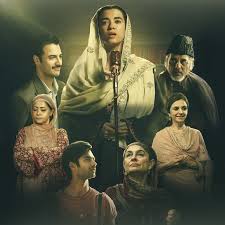

Songs of Paradise Review: A Musical Journey into Kashmir’s Hidden Soul
Bollywood has often shown Kashmir through conflict-laden narratives, but Songs of Paradise breaks this mold, celebrating the region’s rich poetic and musical heritage. Loosely inspired by the life of Padma Shri Raj Begum, the film delves into the untold story of Kashmiri women singers, focusing on Zeba Akhtar, a woman whose talent transcended social taboos. Directed by Danish Renzu, this musical drama highlights a side of Kashmir that remains largely unexplored on the big screen.
Set in an era when women were discouraged from performing publicly, Zeba Akhtar—played with nuance by Saba Azad (and Soni Razdan in the older timeline)—emerges as a symbol of artistic freedom. With the unwavering support of her tailor father (Bashir Lone), Zeba nurtures her dreams under the guidance of Masterji (Shishir Sharma), who encourages her to participate in a Radio Kashmir singing competition. Despite winning, societal prejudice forces her to adopt a pseudonym, Noor Bano, masking her identity while letting her voice shine.
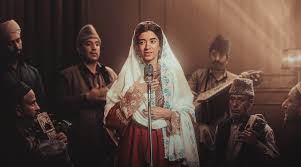
As Noor Bano, Zeba’s haunting voice spreads far beyond her hometown, carrying the profound poetry of Azad Maqbool Shah (Zain Khan Durrani) to the masses. She confronts bureaucratic hurdles, advocates for equal pay, and fights for the recognition of her fellow artists. By refusing to remove her traditional head covering, Noor Bano asserts that women can pursue professional artistry without compromising cultural values. Her journey becomes a beacon for generations of female singers in Kashmir.
The film also examines patriarchy beyond gender. While Zeba’s father embodies support, her mother (Sheeba Chaddha) reflects traditional resistance, showcasing societal constraints even within the family. This nuanced portrayal underlines the complexity of Zeba’s struggles as she balances societal expectations and personal ambitions.
At the heart of the film is Saba Azad, whose performance anchors the narrative. She skillfully embodies the Kashmiri accent, body language, and emotional depth of a young woman caught between personal ambition and societal restrictions. When Azad Maqbool Shah remarks that “if prayer had a voice, it would have been Noor Bano’s,” the audience believes it because of Saba’s authentic portrayal. Her voice is not merely performed; it resonates physically, capturing the subtleties of the singer’s craft. In comparison, Soni Razdan’s portrayal of the older Zeba feels less convincing due to an inconsistent accent, while Sheeba Chaddha effectively uses her small role to leave a lasting impression.
A standout element of Songs of Paradise is its music, masterfully recreated by Santoor maestro Abhay Rustum Sopori. The film’s score immerses the audience in Kashmiri musical traditions, amplifying the poetic messages of Lal Ded and Shamas Faqir. The recurring question—“Will my beloved accept me with my imperfections?”—echoes throughout, enhancing the emotional resonance and drawing viewers into Zeba’s journey.

The film’s cinematography deserves special mention. Every frame evokes the natural beauty of Kashmir, rendered in painterly compositions that complement the narrative. Production design and costumes authentically recreate the period, lending credibility to the story and transporting viewers into Zeba’s world. Despite these visual and musical triumphs, the screenplay occasionally falters. After an engaging build-up, the narrative momentum slows, and the emotional payoff does not fully satisfy.
Renzu employs a familiar flashback template, where the older Noor Bano reflects on her past with a young music researcher played by Taaruk Raina. While dialogues exploring gender norms are insightful, they increasingly serve as exposition rather than driving the story. The absence of political context from the era and limited exploration of Noor Bano’s influence beyond Kashmir curtail the film’s potential. Despite her receiving the Sahitya Akademi Award, the wider reach and significance of her music remain underexplored.
Ultimately, Songs of Paradise oscillates between heartfelt storytelling and missed opportunities. It shines in moments highlighting Saba’s powerful performance, Sopori’s evocative music, and the film’s aesthetic presentation, but falters when it sidelines deeper context. The filmmakers’ sensitivity is evident, with disclaimers noting that no humans were harmed, signaling careful handling of Kashmir’s delicate sentiments.
For viewers, the film is a celebration of talent and perseverance, capturing the struggles of a pioneering woman artist while paying tribute to Kashmir’s musical and poetic legacy. Watch it for Saba Azad’s captivating portrayal, Sopori’s soul-stirring melodies, and the rare glimpse into a Kashmir defined by art rather than conflict.